Notebooks
November 5th, 2025
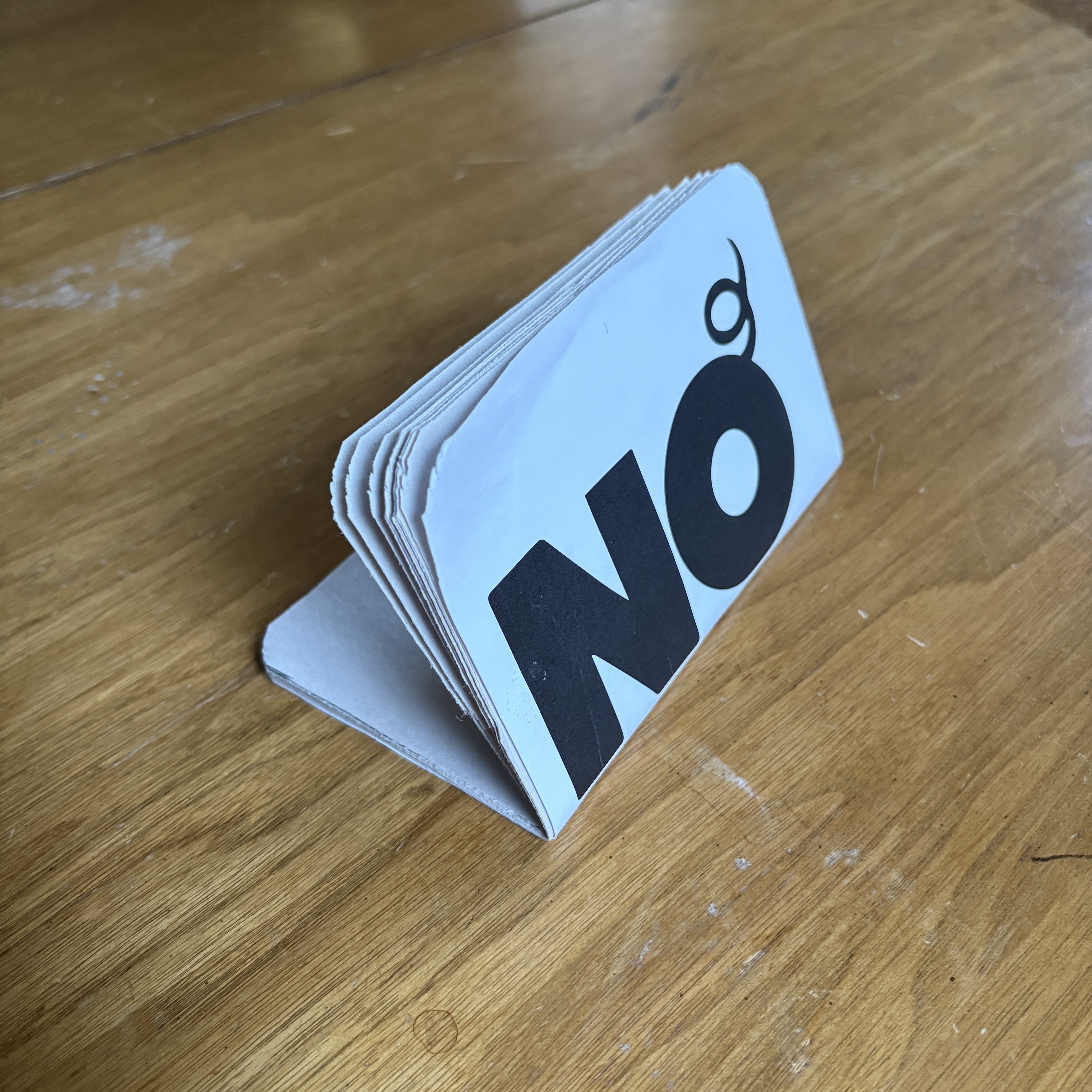
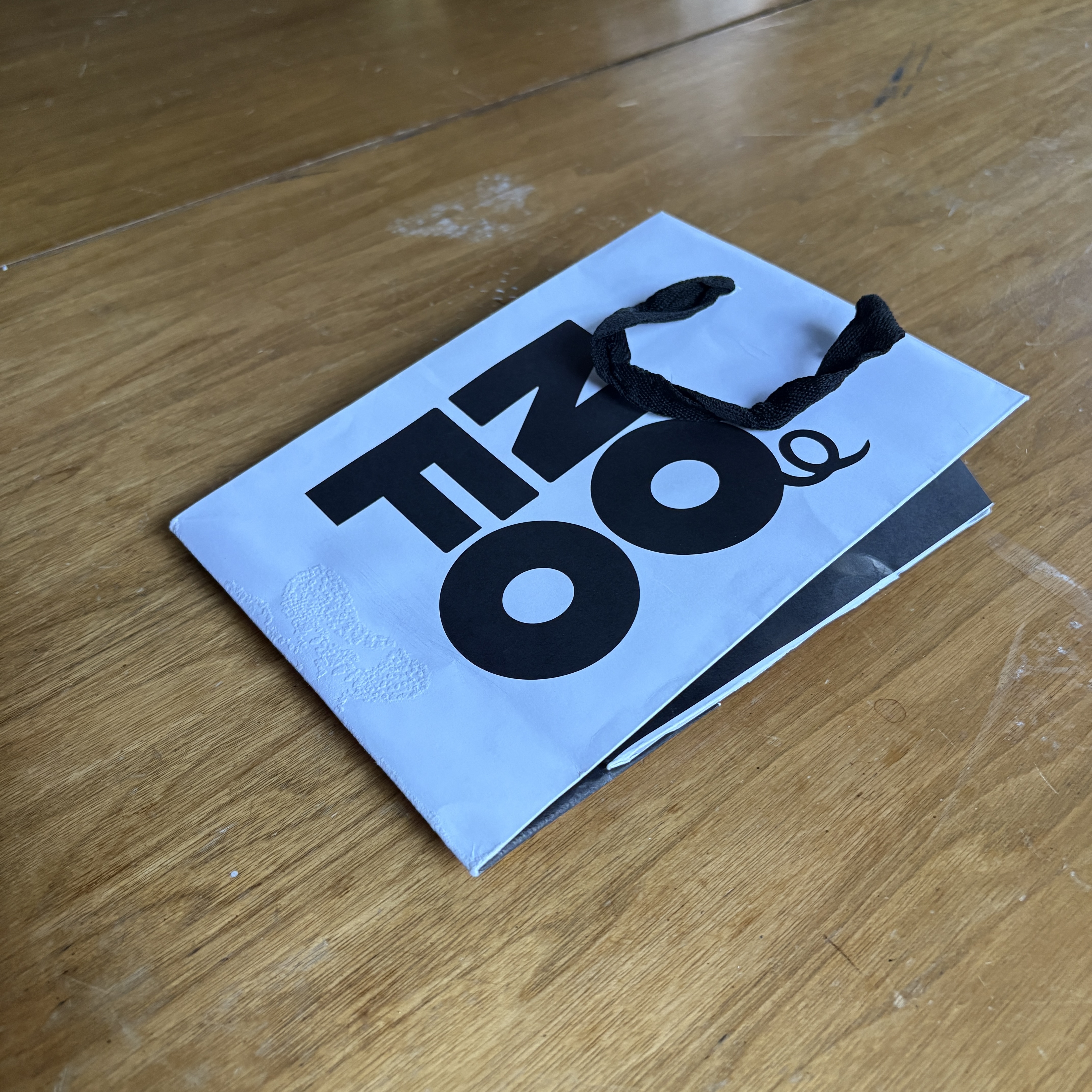
I cut off a section of a bag from a small store near my house called NoFo. I used it as a cover to create a 3.5-inch x 5.5-inch pocket notebook. It was easy to do. I just cut out 12 pieces of paper to a 5.5-inch x 7-inch size. Then I stapled them together with the NoFo cover.
I've been using pocket notebooks since April 2020. However, I didn't start making my own notebooks until about 2 years ago. I used to spend $12.95 plus $5 shipping to order a 3-pack of Field Note notebooks. It wasn't until halfway through design school that I realized that I could just make them myself.
Aaron Draplin is a graphic designer I looked up to in high school. I used to watch his content about making fun logos and hoarding cool trinkets in his neatly organized garage. One of the items he would collect were small memo notebooks. Each had their own cool graphic on the front. Because they weren't being manufactured anymore, he decided to create them for himself. He later turned this into the company Field Notes. I wanted to be a creative guy who makes their own things just like he did, so of course, I bought his notebooks.
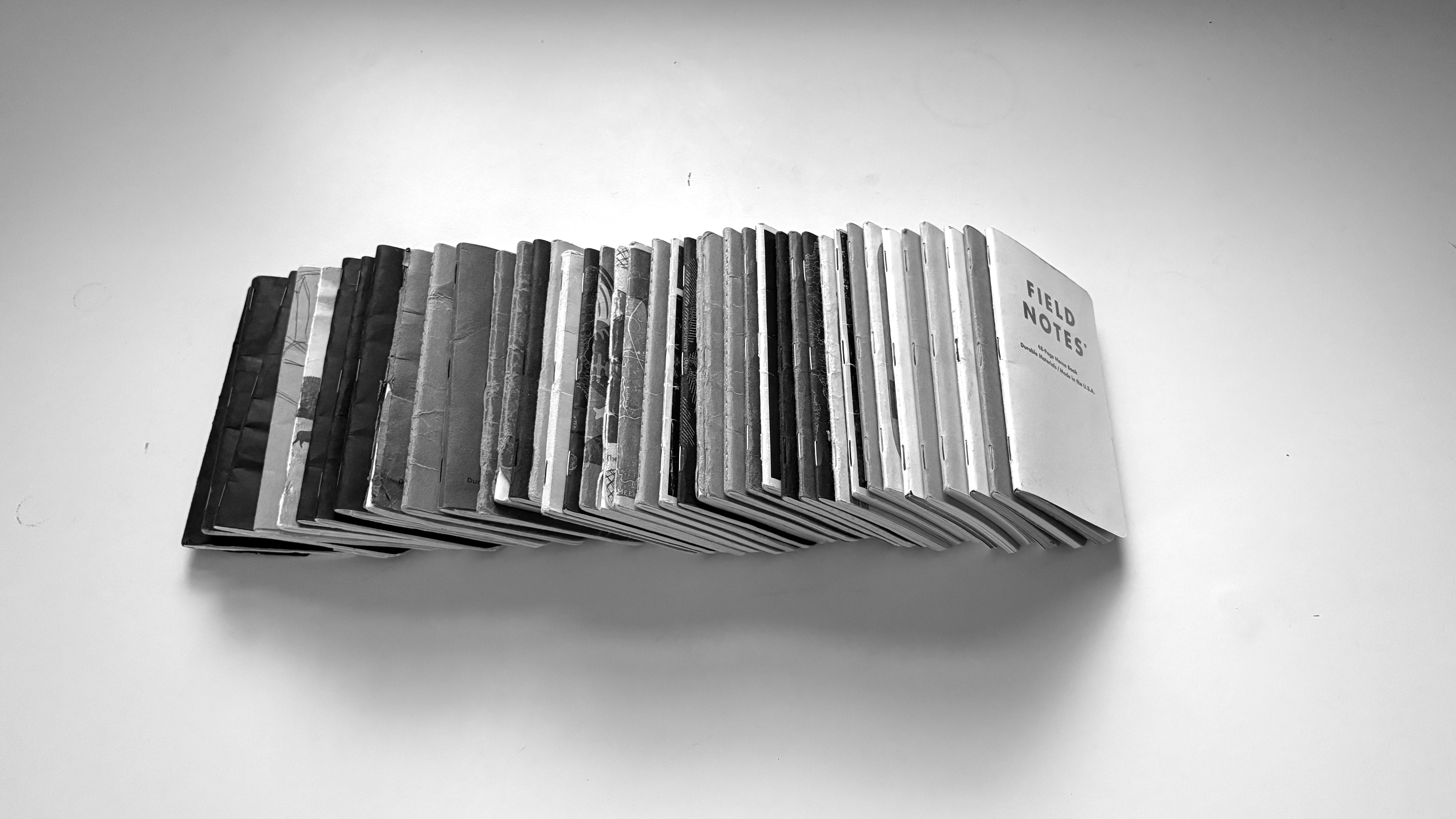
I think a lot of other people saw Aaron Draplin as a design role model and got their own Field Notes. It was like I was a part of a community, not just a high schooler trying to learn Adobe Illustrator at home. Many designers on YouTube had them as props in their videos. Entering college, I saw classmates and teachers put them out on their desks. If you wanted to be a creative, you used Field Notes.
In design school we are constantly taught to tell stories. You can't just design a good product; you have to give it a story. You have to convince an audience it's a part of their identity to own it. Aaron Draplin's story about Field Notes convinced a past version of myself to buy overly designed paper. This way of thinking reinforces a narrative that won't leave my brain: that those who produce are the winners, and those who consume are wasting time or money. For designers to survive, consumers must be tricked into buying their products.